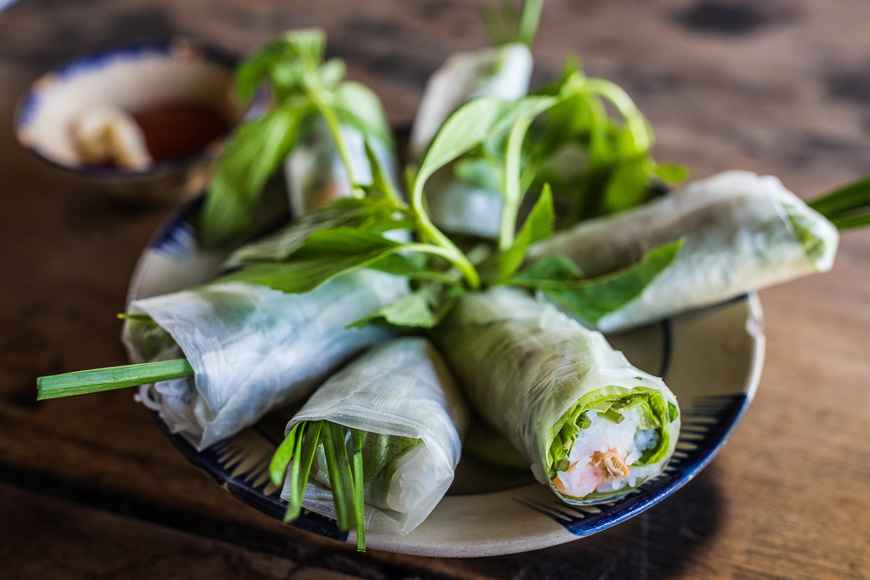
Vietnam is one of those places where you can plan your whole trip around delicious eats. Not only are the country’s many dishes a treat for your palate, eating local food is one of the best ways to get to know Vietnamese culture and people. Dedicated foodies who go beyond famous eats like phở and bánh mì will find each regional dish is a unique combination of local ingredients, preferences and influences. Here’s a quick guide to a gastronomic adventure around Vietnam.
North
Subtle sophistication
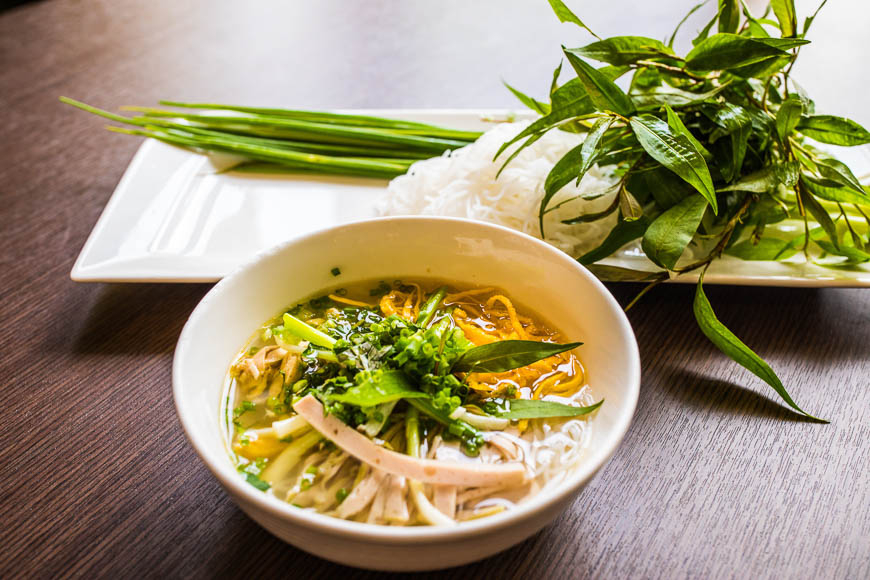
There’s a Vietnamese saying that translates to ‘eat Northern, dress Southern.’ Locals in the capital city of Hanoi have a knack for complex recipes that bring out flavours from farm-fresh ingredients. For example, a bowl of steaming bún thang (rice noodles in chicken stock) may take hours to prepare, but when it’s served, the subtle hints of shrimp paste and wood ear mushrooms in the clear broth feels light and effortless.
Long traditions
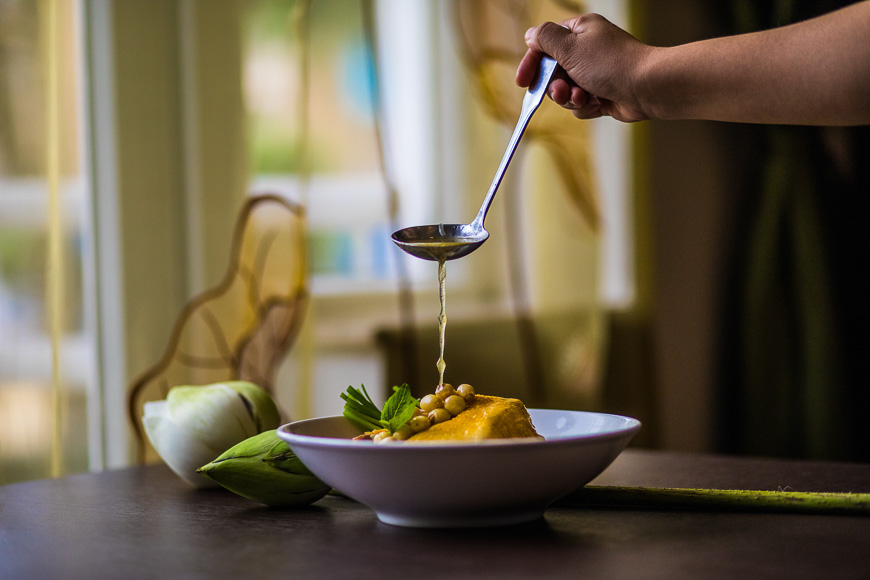
Many Northern Vietnamese recipes date back hundreds of years. The food here is heavily influenced by age-old traditions and practices. Bánh chưng, a speciality steamed rice cake prepared on Lunar New Year, comes with its own legend. Inspired by what his land has to offer, a prince created a dish of mung bean and rice wrapped in dong leaves. This dish was so representative of the land that the king rewarded his son with the throne. Vietnamese families still gather every Tết (Lunar New Year) to make bánh chưng as a reminder of our roots.
Street food heaven
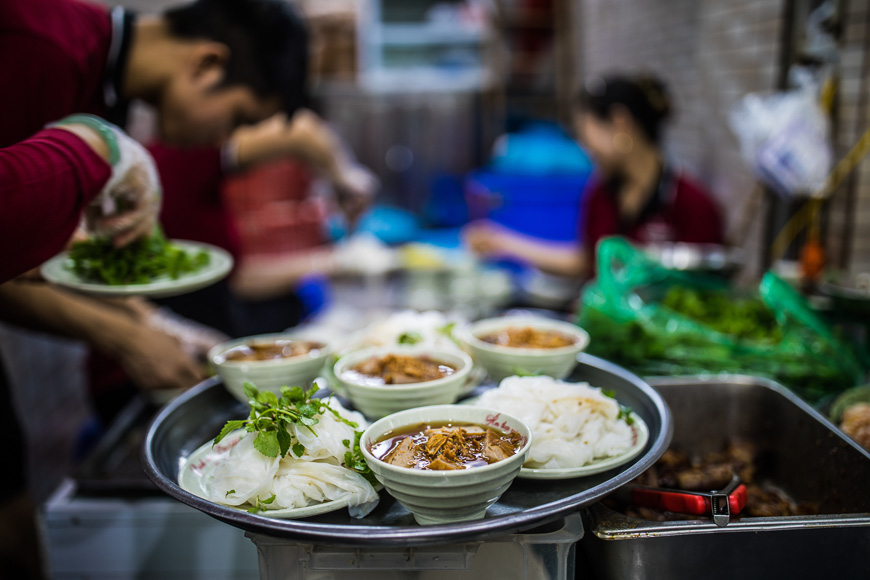
Food from the North tends to have mild flavours and highlights the natural taste of ingredients, and served with lots of herbs and condiments. Don’t be intimidated by the options that come with your phở. Fresh chillies, limes, and vinegar garlic are all here to help. Before adding anything though, take a sip of the pure bone broth flavoured with star anise, cardamom, and cinnamon. It’s a way to show your respect to the cook, and appreciate the finesse of Northern Vietnamese cuisine.
TRY IT:
Bún thang Thuận Lý, 33 Hàng Hòm, Hoàn Kiếm District, Hanoi
Phở bò Khôi Hói, 50 Hàng Vải, Hoàn Kiếm District, Hanoi
Phở bò Khôi Hói, 50 Hàng Vải, Hoàn Kiếm District, Hanoi
Central
Sauces and seafood
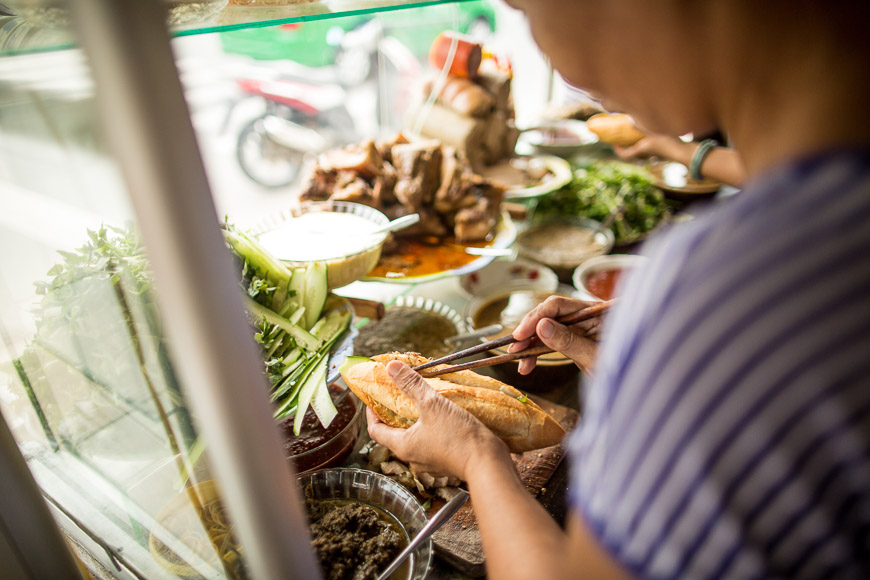
If you’re a fan of spices, sauces, and dips, you’ll love the food of Central Vietnam. Any local here will tell you that the secret to amazing food lies in the dipping sauce. Sauces in Đà Nẵng, Hội An, and Nha Trang go way beyond your average nước mắm (fish sauce.) Supplied by a long coastline, Central Vietnamese cooks come up with many ways to preserve seafood. Fermented shrimp and fish paste are an essential part of any meal. It's common for each dish to be accompanied by its own dip, making something as simple as a local lunch look like a royal feast with lots of small dishes on the table. Just as well, because this region is home to Vietnam’s former imperial capital, Huế.
Huế cuisine
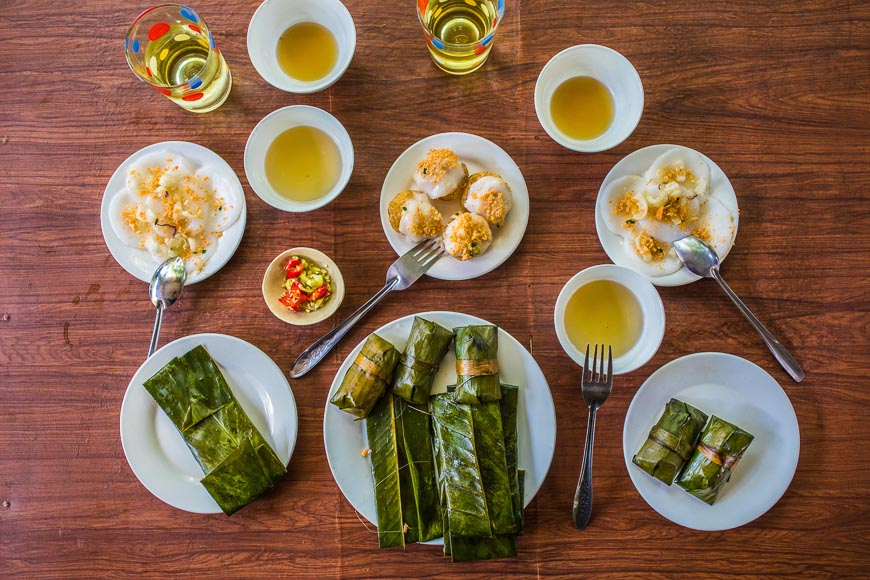
Huế is famous for its imperial legacy as well as its spicy food. No trip to Huế is complete without sitting on a sidewalk, slurping up every last drop of the rich, red spicy broth of a bún bò Huế (Huế beef noodles.) From chili oil, chili flakes, to chili jam, Huế is a gem for travellers who love a fiery meal. Not a fan of spicy food? You can explore the wonderful world of Huế cuisine through its delicious dumplings. Huế is known for a variety of steamed dumplings in playful textures, topped with fresh shrimps or shrimp flakes. Of course, each one comes with its own dipping sauce.
Secret ingredients
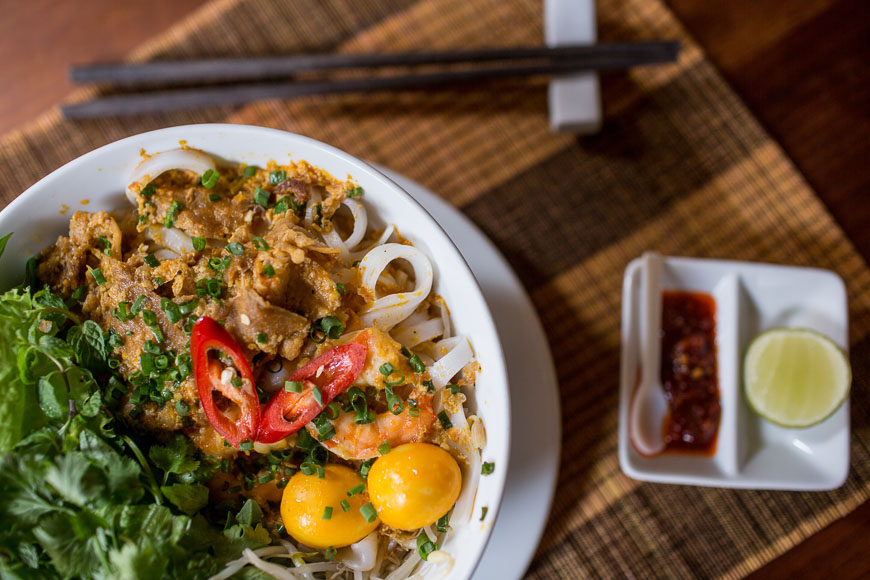
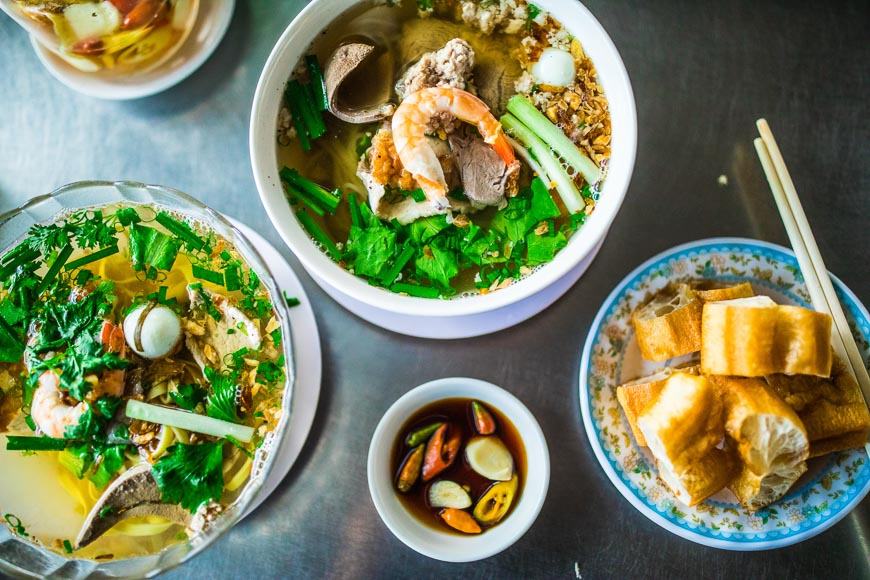
Regarded as some of the most creative in the country, cooks in Central Vietnam have unique ways of flavouring food. In a perfect bowl of mì Quảng (Quảng noodles), turmeric noodles are cut using a knife wiped with peanut oil. The noodles are submerged in just a few spoonfuls of broth, topped with fresh greens, pork or chicken, quail eggs, crushed peanuts, rice crackers and chili. Stopping at a random vendor in Hội An for an early-morning bowl of mì Quảng is a must-have experience. Great Central Vietnamese dishes are impossible to find elsewhere, so make every meal here count.
TRY IT:
O Lé Dumplings, 104/17/9 Kim Long, Huế
Mì Quảng Bà Vị, 166 Lê Đình Dương, Hải Châu District, Đà Nẵng
Mì Quảng Bà Vị, 166 Lê Đình Dương, Hải Châu District, Đà Nẵng
South
Humble beginnings
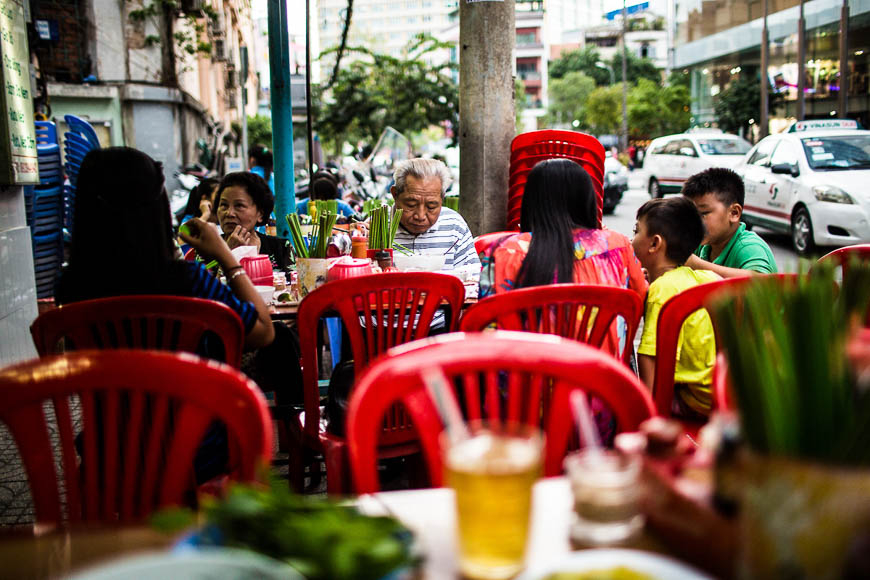
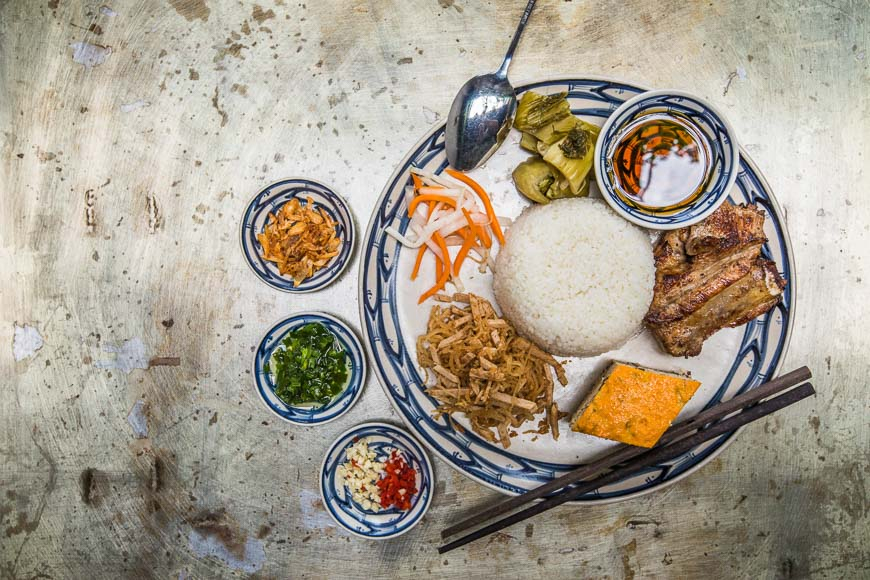
Just like the people here, Southern Vietnamese cuisine is open to many influences. Locals in Hồ Chí Minh City bring their own cooking styles from many different parts of Vietnam, creating a culinary hub in the city. Southern dishes are often humble and casual. Unlike some lunch-only eats in the North, most food stalls in Southern Vietnam open all day. The popular cơm tấm (broken rice) is a fantastic breakfast, lunch, or dinner. Made from fractured rice grains that couldn’t be sold, this once-modest dish is now a southern specialty. Served with grilled pork chops and slices of Vietnamese meatloaf, cơm tấm is topped with a generous spoonful of green onions and sweetened fish sauce. In fact if there’s one taste that characterises the cuisine of Southern Vietnam, it’s sweetness.
The sweet South
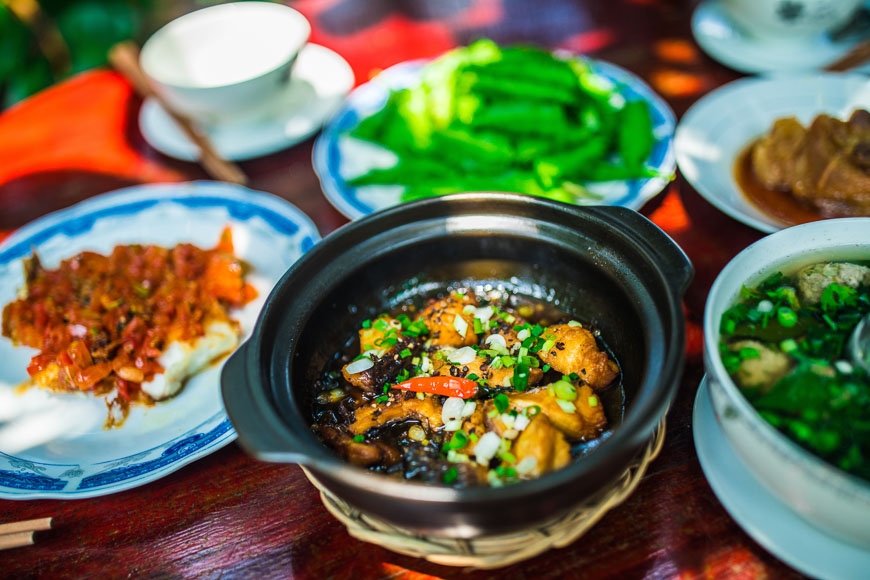
Vietnamese in the South are big on sweetness. A pinch of sugar or a dash of coconut milk makes everything taste better here. Cá kho tộ (claypot fish) gets its distinctive dark colour from caramelised sugar. Seasoned with fish sauce and pepper, the sweet and savory concoction complements the natural taste of the fish, making cá kho tộ burst with flavour. This dish is a great representative of Southern food, and specifically the Mekong Delta. It has sweetness, bold flavours, and features freshwater fish from the Mekong River.
Dining in the Delta
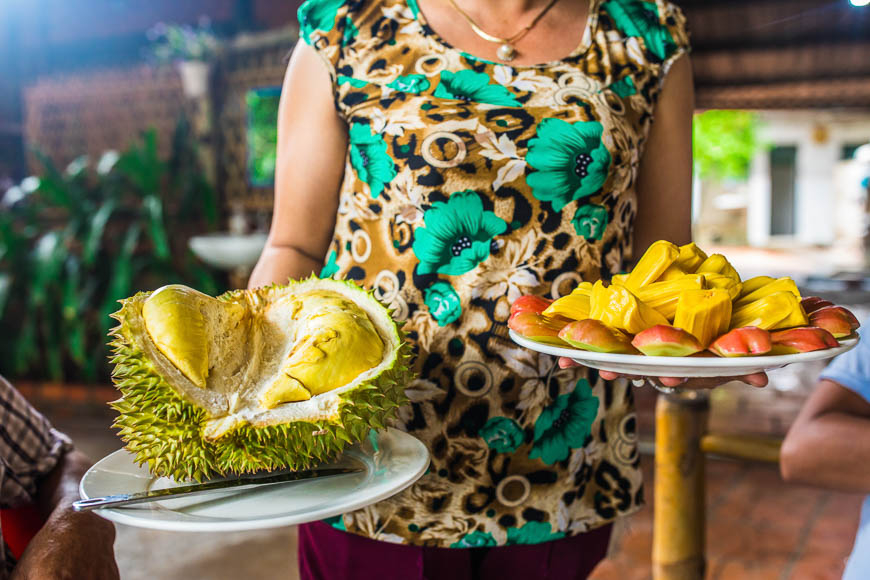
The verdant Mekong Delta region is all about green vegetables, freshwater fish, and abundant tropical fruits. You’re sure to eat well here. The nutrient-rich soil is so fertile that when cultivated by hardworking Vietnamese farmers, it yields beautiful produce and some of the sweetest fruits in the country. After a day of paddling along small canals surrounded by mangrove trees, a plate of freshly picked dragon fruit, mangosteen, or longan with honey tea is a signature Mekong Delta snack. Dining in the South is a very laid-back experience. Recipes are simple and people are welcoming. Vegetable hotpot on a straw mat in the backyard is a great way to get to know the locals. You’ll find they are just as sweet as the fruit they grow.
TRY IT:
Cơm tấm Nguyễn Phi Khanh, 113 Nguyễn Phi Khanh, District 1, HCMC
Fresh fruits at Cái Bè Floating Market, Mekong Delta
Fresh fruits at Cái Bè Floating Market, Mekong Delta
See more: http://bit.ly/3c80EWC
===================================================
You travel to Vietnam: http://bit.ly/31DDiD9
You need Hotels: http://bit.ly/3c80EWC
You want to see Vietnamese culture: http://bit.ly/37UQ6GK
Top famous places in Vietnam: http://bit.ly/2HK1Kda
Vietnam Tours: http://bit.ly/2SSy5Vv
Vietnamese cuisine: http://bit.ly/39SF7iy
Vietnamese Hotels: http://bit.ly/3c80EWC
---------------------------
Sanitary equipment: https://buiminh.com/
Viglacera sanitary equipment: https://viglacerabm.com/
Inax sanitary equipment: https://inaxbm.com/
Toto sanitary equipment: https://totobm.com/
Caesar sanitary equipment: https://caesarbm.com/
Water heater: https://bm8.vn/binh-nong-lanh-1
=============================
Sub & Like: http://bit.ly/2HMjbty
The Best Hotels Vietnam: http://bit.ly/3c80EWC
#vietnam #hotels #spa #hotelsspa
=============================
Contact US
Vinatravel.org - Vietnam Travel - Everything About Vietnam
Address: 6th Fl, FPT Building, Duy Tan, Cau Giay, Ha Noi
Phone: 024 7300 1102
Fax: 024 7300 1102
Email: vinatravel.org@gmail.com
Website: https://www.vinatravel.org